

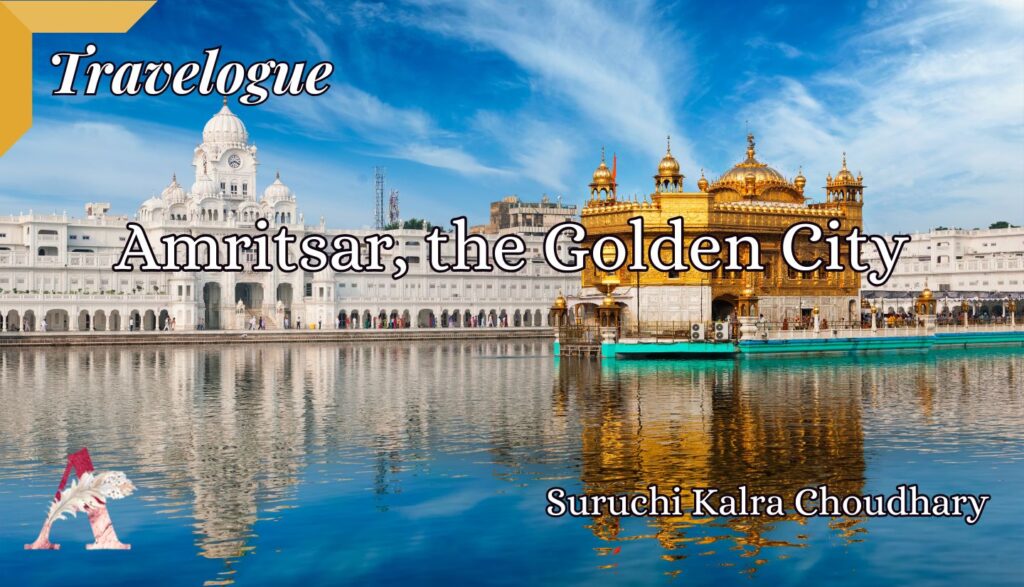
According to historical/ religious records, the Sikh Gurus established the city of Amritsar, constructed the Amrit Sarovar, located Shri Harmandir Sahib in the midst, and ceremoniously installed Shri Guru Granth Sahib Ji. Maharaja Ranjit Singh fortified the city, and later on, twelve gates were added to the walled city.
Hindu mythology traces the Bhagwan Valmiki Tirth Sthal to the hermitage of Maharishi Valmiki, where Goddess Sita gave birth to twins Luv and Kush. It is believed that they caught Lord Ram’s Ashwamedh horse and captivated God Hanuman to the tree in the Durgiana temple.
The heritage city is the economic, cultural and spiritual hub in the state of Punjab. You can travel by air to Sri Guru Ram Dass Jee International Airport or by train to Amritsar Junction or by road on NH 44/ NH 3 or the erstwhile Grand Trunk/ G T Road connecting Delhi to Attari, Pakistan. You can stay in a luxury resort or a budget hotel, or a charitable serai.
We started early morning and reached Amritsar by afternoon. We quickly freshened up and were off to Wagah border. The Samjhuata Express, i.e. the train, the bus service and trade vehicles between India and Pakistan cross the border at Attari. Every evening before sunset, Beating Retreat Ceremony is carried out by Indian Border Security Forces and Pakistan Rangers at Wagah Border. The brief ceremony is a surreal experience arousing patriotism. Soldiers on both sides perform artistic military drill in a coordinated manner as they lower their national flags. Large crowds gather at the display and loud slogans reverberate all around.
We got up at the wee hour next day, and headed to Shri Harmandir Sahib/ Golden Temple. Melodious and purgative Shabads and Kirtan filled the environs. As you bow down and pay obeisance, it feels soul-satisfying. The Kada Prasad is divine. Sitting in Sangat and partaking Guru ka Langar is a unique, humbling, and enriching experience.
The area around has been aesthetically developed to enhance the historical importance of the place, and a statue of Maharaja Ranjit Singh has been installed. Next, we went to the Jallianwala Bagh and paid respect to the freedom fighters. An eternal flame and, photo gallery bear testimony to the Baisakhi massacre. The Partition Museum nearby showcases the pictures, artefacts of India-Pakistan partition, providing a heart-wrenching account, and you depart with a pensive mood.
We next visited the ancient Durgiana Mandir, dedicated to Goddess Durga. The gilded dome and ornate silver doors reflecting in the surrounding pristine Sarovar exude divinity and peace. On our way back, we visited the Bhagwan Valmiki Tirth Sthal. The vast complex has sage Valmiki’s hut, sacred pond and a temple with idols of deities. Mythology and history coexist here.
Amritsar is a food paradise and offers a vast array of vegetarian and non-vegetarian Punjabi cuisine. You cannot miss the finger-licking street food: Chole Bhature, Lassi, Kulfi, Tikki, Stuffed Kulche, Satpura, Tandoori Tikkas and more. You must carry papad, wari and pinni back home.
We hired a rickshaw and the friendly guy took us on a heritage tour through narrow bylanes, pointing to various katra and iconic darwaza. It was fun stopping and bargaining at shops displaying vibrant phulkari dupatta, jutti, handicraft, and religious artefacts.
It was a memorable religious, historical, food and shopping trip; all rolled in one.
Suruchi Kalra Choudhary

0 Comments