

There are several cities in India that bear the historical significance due to their old political, military and cultural heritage, including art and architecture. Also, there are cities which are famous as these are the birthplaces of great personalities. These cities still hold the legacy with the remnants of historical sites, as well as observance of events of cultural significance.
Kataka (very recently, its spelling has been changed from “Cuttack”) is one such city in Odisha. Flanked by the two rivers, the Mahanadi and the Kathajodi, it served as the capital of Odisha till August 1949, when the capital officially shifted to Bhubaneswar.
Historical Significance:
The meaning of “Kataka” in Odia is the capital city or the fortified city. It served as the capital and military base for the kings of different dynasties. It is an old city that dates back to the 10th century CE, when it was established as a military settlement in 989 CE by the king Nrupa Keshari of the Keshari dynasty.
Now also termed the “Millennium City”, it holds the sobriquet “The Silver City of India” due to its well-known silver filigree works. It is the birthplace of Netaji Subhas Chandra Bose, and owns the pride of being the political and cultural capital of Odisha.
Location & Transport Communication:
Kataka is about 20 km from Bhubaneswar and is well connected with road, rail and air networks. Since it is located on NH-16 (Kolkata-Chennai Highway) and on main railhead (Howrah-Chennai route), frequent bus and train services are available to different places in India. The nearest airport is Bhubaneswar, and it is about 28 km.
Places To Visit:
There are several places to visit in and around Kataka. The important ones are:
1) Barabati Fort
2) Maa Kataka Chandi Temple (The presiding Deity of Kataka)
3) Maa Gadachandi Temple
4) Shri Gadagadeshwar Temple
5) Birthplace of Netaji Subhas Chandra Bose & Museum
6) Odisha State Maritime Museum
7) Ananda Bhavan Museum & Learning Centre
8) Freedom Fighter’s Memorial in Old Jail Complex
9) Swaraj Ashram
10) Qadam-e-Rasool Mosque
11) Mahanadi River Boating club
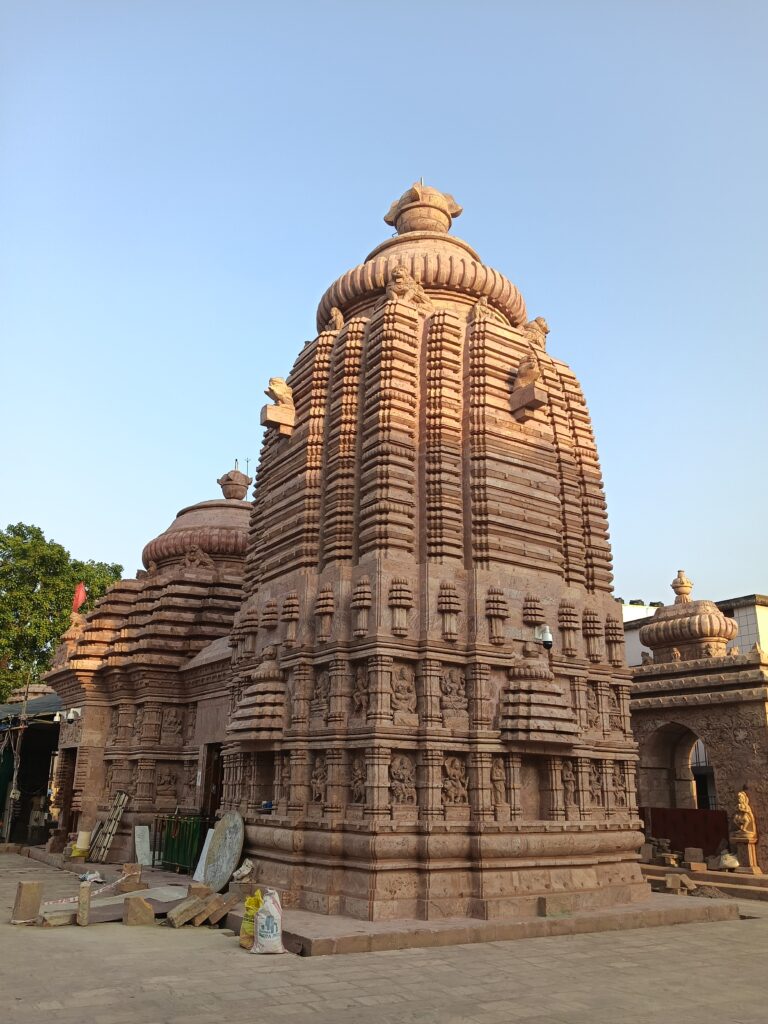
Maa Kataka Chandi Temple
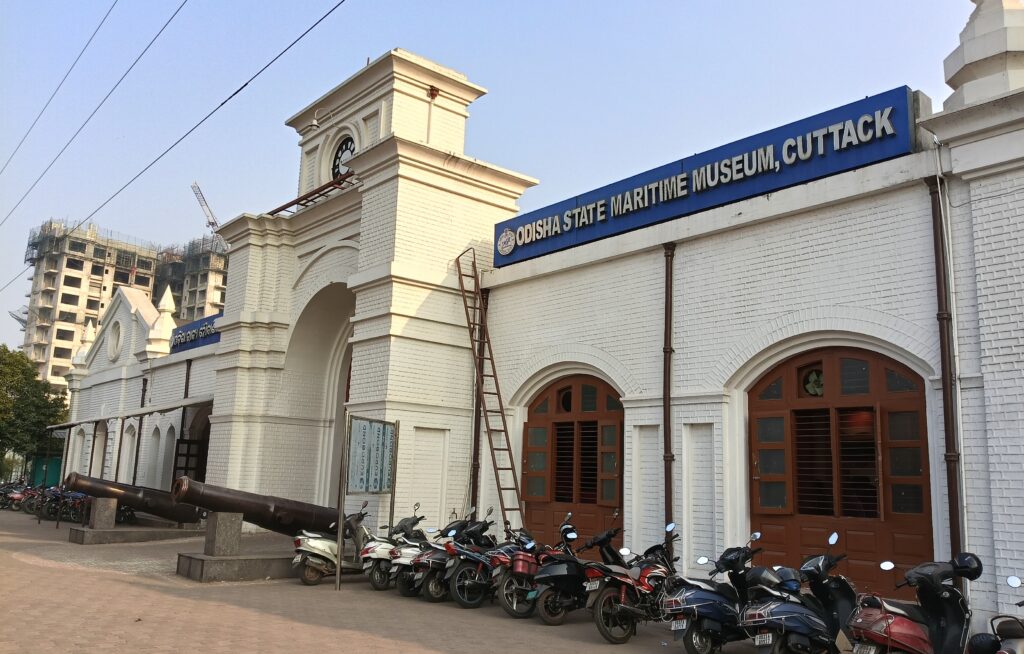
Odisha State Maritime Museum
Art And Architecture:
Kataka, known as the “Silver City of India”, is famous for “Rupa Tarakasi” (Silver Filigree) works. Shops are located in Naya-Sarak, Chaudhury-Bazar, and Buxi-Bazar area. In addition, hornwork items are also available here.
Architectures in Cuttack had the influence of the ruling dynasties. Barabati Fort was built with Kalinga architecture by the Ganga dynasty. Qadam-e-Rasool design had Mughal influence. Ravenshaw University and Odisha High Court buildings were built with British Colonial architecture.
Fairs And Festivals:
Kataka is famous for “Durga-Puja” (a 16-day festival during Dussehra), “Kali-Puja” during Diwali, and a 7-10-day “Bali-Yatra” fair beginning from “Kartik Purnima” day.
Unique Odia Food In Kataka:
Kataka is the cultural capital of Odisha. Here, all types of Odia food, both vegetarian and non-vegetarian, are available in restaurants and street food hubs. In addition to the common food items, typical main dishes, snacks, and sweet items give a unique taste.
- i) Pakhaala Bhaata (Water Rice): It bears the Odia signature. “Pakhaala Bhaata” can be a main dish for lunch with items like “Saaga”, “Badi Chura”, “Aloo Bharata”, “Machha Bhaja” (The water rice with items like fried leaves, crushed sun-dried lentil dumplings, boiled and mashed potato, fish fry. Also, salt, lemon and curd are added to water rice to give a light salty-sour taste.) It is preferred mostly in Summer for its coolness. A tourist should taste “Pakhal Bhaata” at least once in a restaurant.
- ii) Dahi-bara, Aloo-dum, Ghuguni (Curd-vada, minced-potato curry, gravy yellow-peas curry): It is the most famous street food snack item consisting of the mix of three items as above.
iii) Thunka-Puri, Aloo-dum: Not a common street food, but available in a few restaurants. More common in fairs like “Baliyatra”.
iv) Chakuli Pitha: Pancake eaten with Aloo-dum or “Ghuguni”
v) Sweet cakes: “Manda-pitha”, “Arisa-pitha”, “Kakara-pitha” etc.
vi) Sweets: Unique Odia sweets are “Rasagola” (Rasgulla), “Chhena-poda”(deep baked cheesecake), “Chhena-Jhilli”, “Rasabali”, “Chhana-gaja”, “Khasta-gaja”, “Khira-gaja”, “Chandra-kanti”, “Labanga-lata” etc.
Concluding Words:
Kataka was the seat of power during the Mughal, the Maratha and the British period. The city still bears the legacy of valour, culture, brotherhood, and religious tolerance. The heritage buildings and old temples, mosques, and churches are witness to the cultural prominence of the city. A two-day visit is sufficient to cover the tourist places in and around it. Kataka and Bhubaneswar together are called “The Twin-City”. Tourists can stay in Kataka or in Bhubaneswar to cover both the cities. Even a one-week visit can cover all places like Kataka, “The Golden Triangle” (Bhubaneswar, Puri, Konark), Chilika Lake, etc. The time and budget of the tourists only matter.
Kishor Kumar Mishra

0 Comments