
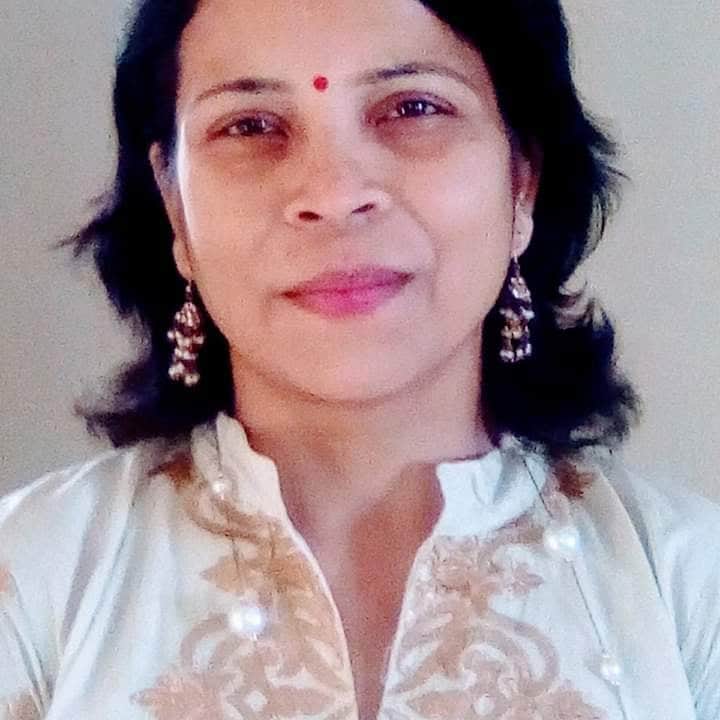
Mousumee Baruah is a poet, writer, wanderlust enthusiast, hodophile, foodie, homemaker, and artist. She is also a published poet. Her poetry collection, The Castaway, has been well-received by her friends and readers. She loves traveling to remote places in India, especially the hills and mountains. She has received appreciation for her cooking, writing, and painting.
City: Gurgaon
Who or what inspired you to embark on you journey in the field of Arts?
Art has always felt like a natural extension of human expression, whether it’s through poetry, writing, or visual mediums. For me, art is inspired by life’s quiet, profound moments: the sound of rain on a tin roof, the way a butterfly pauses on a flower, or even the aching beauty of nostalgia.
If I were to point to specific inspirations, it would be the landscapes of Assam, its lush tea gardens, and the simple but layered experiences of adjusting to new environments, like my early days in Delhi and now in Gurugram. Every moment becomes a canvas, every emotion a shade of color. Art became a way to capture fleeting moments of life.
Have you pursued any formal or professional training in arts or are you self-taught?
I had no formal training, but I remember those days when college was closed. Evenings were spent with a talented artist from our neighborhood. I would listen to her stories of her time at Visva-Bharati, mesmerized by the world she painted in her canvases. I watched her work with oil paints, her brush gliding across the canvas with the tenderness of a mother stroking her child’s hair.
What is your practice routine?
My art practice doesn’t follow a strict routine; it’s deeply intuitive and inspired by my surroundings and emotions. I usually begin by observing—whether it’s nature, people, or moments that resonate with me. I let those impressions sit with me, often translating them into quick sketches. Recently, I saw a girl, a tightrope walker, and was overwhelmed by her balancing act, saddened by the fact that there were no safety measures. It tells a story of survival, and I tried to paint her, silently apologizing to her.
I believe art is as much about reflection as it is about creation, so I try to dedicate time for both.
Who has been your biggest influence or inspiration for your growth in arts?
Claude Monet, a pivotal figure in the development of art, is often regarded as the father of Impressionism, a revolutionary movement that reshaped the course of painting. Monet was deeply influenced by his surroundings and the natural world. He believed in capturing moments, light, and color rather than focusing on fine detail, inspired me.
Monet’s most famous works often depict serene landscapes, gardens, and seascapes, where light plays a central role. His technique of applying short, quick brushstrokes, coupled with a deep sensitivity, allowed him to convey the fleeting nature of time .
He inspired countless artists, pushing boundaries beyond the traditional confines of academic, formal representation.
How do you approach creating new artwork? Do you follow some personal guidelines?
I approach art as a form of storytelling, inspired by nature, memories, and emotions. I begin with a vision, closing my eyes, imagining, and letting the work evolve naturally. I love experimenting with colors—mixing primary colors to create secondary ones and exploring shades born from my imagination. One of the main reason I am fond of art is love for colors, the cloying smell of linseed oil and colors. My process is intuitive, blending freedom with reflection, much like my writing.
Which is your preferred medium of art?
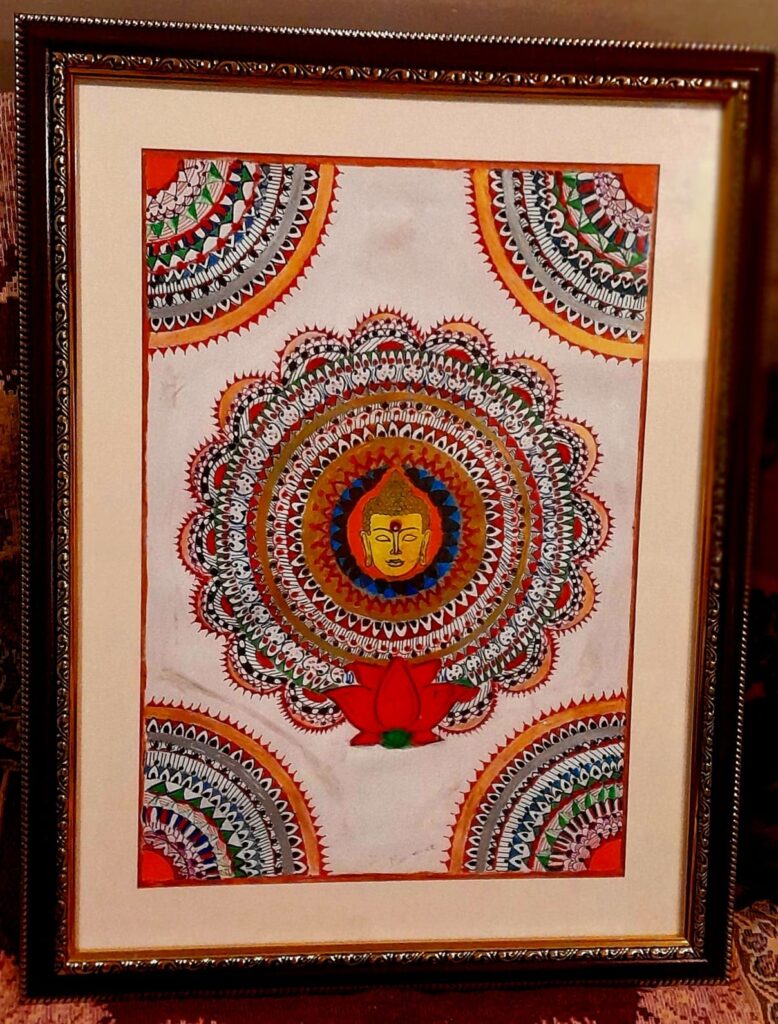
I love oil paints because they give a classic look. I also love Mandala and Indian folk arts. Recently, I have been using acrylics as they dry quickly.
Tell us about your art goals for the year.
This year, my art goal is to further explore my creativity, especially in visual art. I aim to experiment with different mediums, like acrylics, and I would like to learn and practice Mithila, Gond, and Warli art. I’d love to create pieces that reflect the cultural richness of our country.
What would you advise aspiring artists, especially the ones who consider themselves too old to start with the creative form of expression?
Age is irrelevant when it comes to following any passion or hobbies. If one have the urge to create, that’s all that matters. Many great artists started late—Grandma Moses began painting in her 70s, and Henri Rousseau was in his 40s when he seriously took up art.
We don’t need expensive materials or a grand vision at the beginning. A sketchbook, a few colors, and a willingness to experiment are enough.
Let Go of Perfectionism – Art is about exploration, not about getting it “right” on the first try.
Finding the Medium – There are endless ways to express oneself.
Take Inspiration, Not Intimidation – Look at artists who began later in life, but don’t compare harshly to those with years of experience.
Art should first and foremost be for you. If it brings joy, fulfillment, or catharsis, that is enough.
We don’t have to churn out perfect art daily. A few minutes a day, or even weekly, can lead to progress.
Enjoy the Process – Art is not just about the final piece; it’s about the journey of discovering oneself through creativity.


0 Comments